Runway vs Luma Dream Machine 2026: Which AI Video Platform Is Worth It?
Runway is strongest at editing existing video with AI (Aleph 2.0), with a free trial and plans from $15/month; Luma bundles many models (Ray3, Seedance, Kling, Veo 3.1) plus Luma Agents, from $30/month.
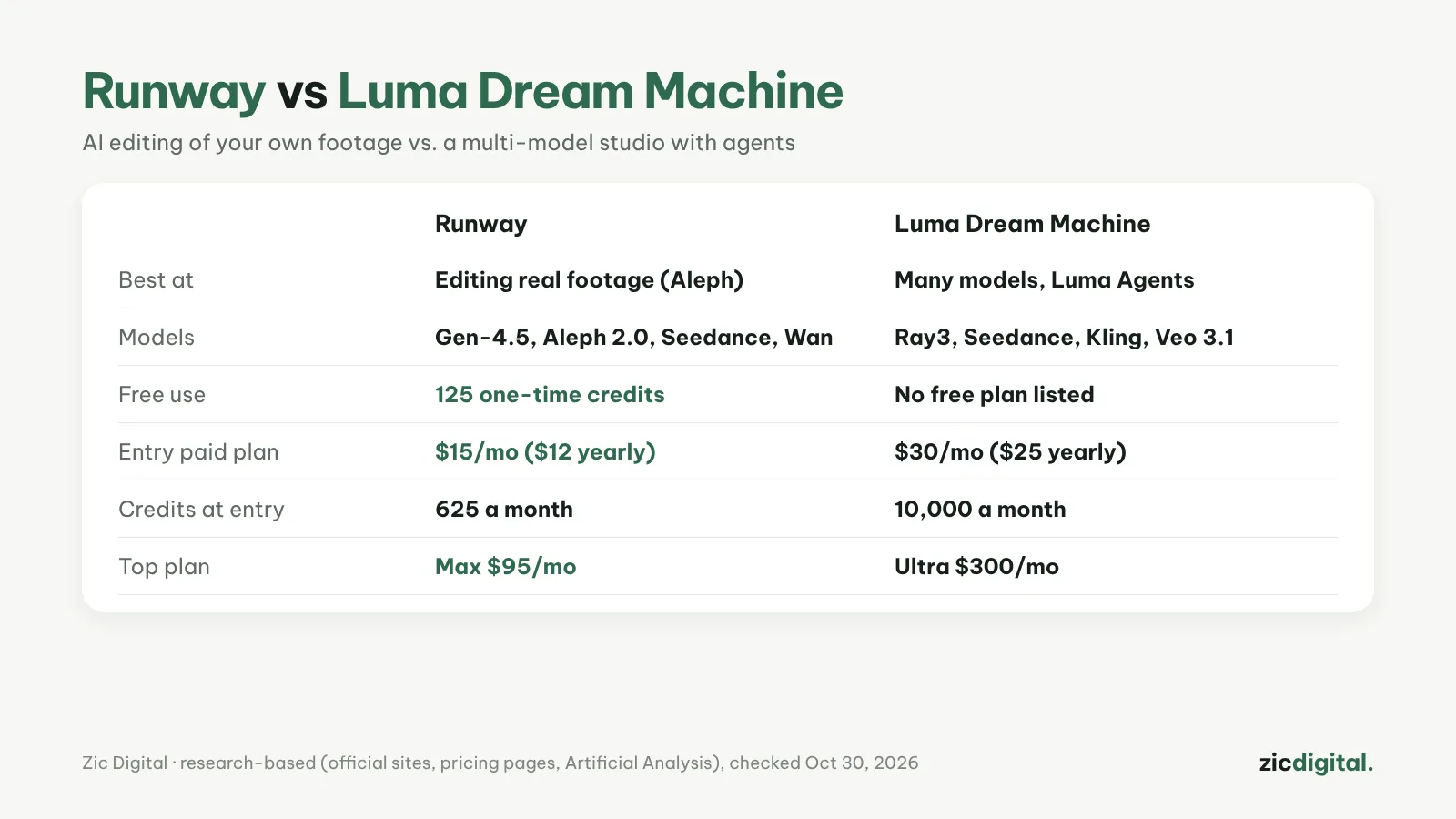
Runway and Luma are both AI video “studios” for serious creators, and both sell access to several models in one place. The biggest difference: Runway is strongest at editing footage you already shot, Luma at testing many models and automating work.
Choose Runway if
- You want to edit real footage with words (change the setting, add or remove objects with Aleph 2.0)
- You want to try it free first (125 credits)
- You want a low entry price (Standard $15/month)
Choose Luma Dream Machine if
- You want Veo 3.1, Kling, Seedance and Ray3 in one place
- You want Luma Agents to automate your workflow
- You need lots of credits (Plus has 10,000 a month, with commercial use)
Cost
Runway: Free gives 125 one-time credits; Standard $15/month ($12 billed yearly, 625 credits, no watermark); Pro $35; Max $95. Gen-4.5 uses 60 credits per 5 seconds, so Standard covers only about 10 clips. Luma: Plus $30/month ($25 yearly, 10,000 credits), Pro $90, Ultra $300; no free plan on the pricing page.
Verdict
Making ads or music videos and need to edit existing footage: Runway. Want to test many top models in one account with a bigger budget: Luma. Beginners should start with Runway’s free trial.
Comparison based on official sites, pricing pages, the Artificial Analysis leaderboard and comparison sites, checked October 30, 2026 — no affiliate links.
Read more: Runway review · Luma Dream Machine review · Adobe Firefly vs Runway 2026 · Artlist review